Santa Clara Home Prep Checklist For A Top-Dollar Sale
April 2, 2026
April 2, 2026
If you want top dollar in Santa Clara, listing your home "as-is" and hoping the market does the rest is rarely the best move. Even in a strong seller market, buyers notice condition, cleanliness, and how move-in-ready a home feels. The good news is that you do not need a massive remodel to make a strong impression. With the right prep plan, you can focus on the updates most likely to support a smoother sale and a stronger result. Let’s dive in.
Santa Clara remains a high-price, relatively fast-moving market. According to Redfin’s Santa Clara market snapshot, the median sale price hit $1,721,800 in January 2026, homes averaged 23 days on market, and the sale-to-list ratio was 105%.
That does not mean every home sells itself. Santa Clara has a lot of housing stock built before 1990, according to a City of Santa Clara economic analysis. In practical terms, that means many sellers are dealing with older systems, dated finishes, or deferred maintenance that buyers may factor into their offers.
In a market where owner costs are high and equity stakes are significant, small differences in presentation can have an outsized impact. U.S. Census QuickFacts for Santa Clara highlights just how high-value this market is, which is one reason thoughtful preparation matters so much.
Before you think about paint colors or throw pillows, focus on the issues most likely to raise questions during escrow. These are often the items that trigger inspection objections, buyer credit requests, or hesitation.
Santa Clara’s simple permit information is a helpful guide here. It specifically lists like-for-like roofing, HVAC replacement, water repiping, sewer line replacement, and water heater replacement as common residential permit categories, with many eligible permits approved within 1 to 2 business days.
That makes these systems a smart place to start if your home has known issues. Buyers may be willing to accept cosmetic updates later, but major mechanical concerns can quickly affect confidence.
If you already know something is failing, fix it early if possible. It is usually easier to address repair work before photos, showings, and offer deadlines are in play.
A clean disclosure package starts long before your home hits the market. If you prepare for likely buyer questions upfront, you can reduce surprises later.
One important step in Santa Clara is checking for wood-destroying pests. The UC IPM termite resource notes that termites can be highly destructive to wood structures and that thousands of California homes need treatment each year.
That is why a pest inspection is worth treating as a standard prep step, especially for older homes. If treatment or repairs are needed, handling them before listing can make your home feel better maintained and easier for buyers to evaluate.
In the Bay Area, earthquake preparedness is not just a safety issue. It can also affect buyer confidence and disclosure readiness.
Cal OES earthquake preparedness guidance recommends securing nonstructural hazards, strapping water heaters, and installing flexible gas connectors. These may seem like small details, but they can signal that a home has been responsibly maintained.
If your property falls in a mapped seismic hazard zone, that may also affect disclosures. It is better to understand those details early rather than scrambling once buyers start asking questions.
If your home was built before 1978, lead-based paint disclosure rules apply. The California Department of Public Health outlines the requirements for residential real estate disclosures involving lead.
This is not necessarily a cosmetic issue, but it is a critical paperwork issue. For older Santa Clara homes, disclosure readiness should be part of your prep checklist from the beginning.
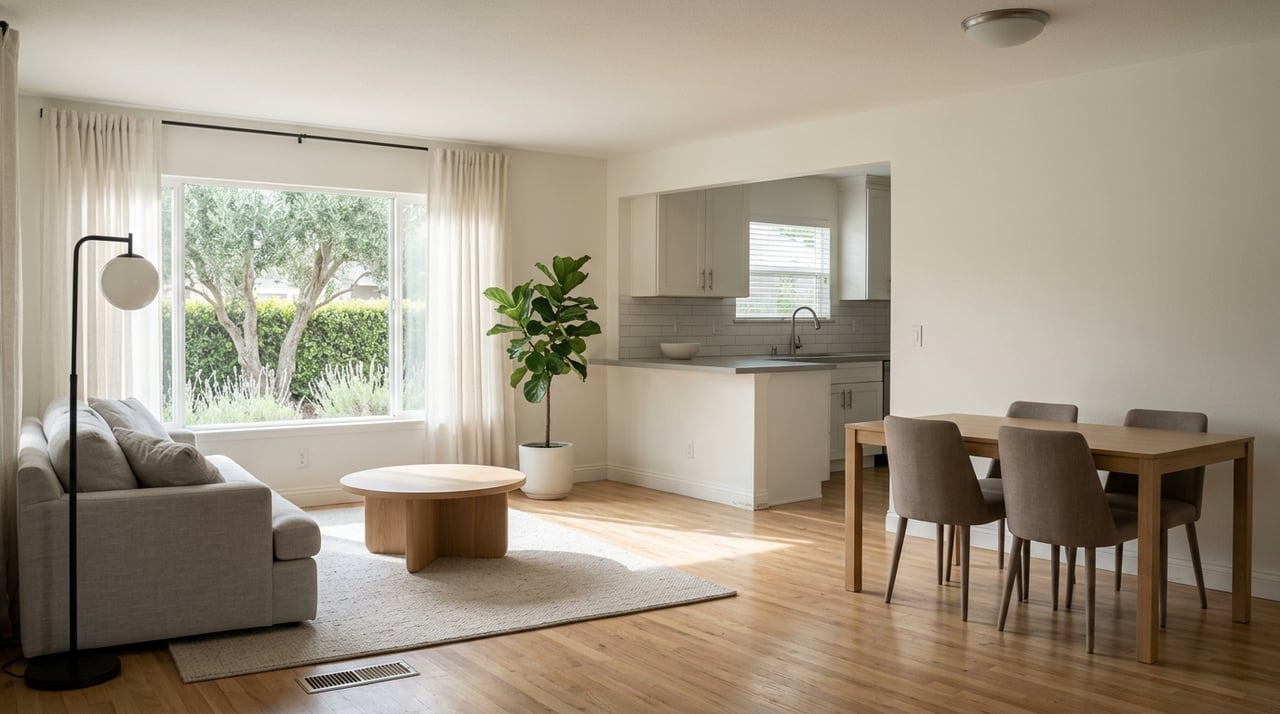
Once major repair items are addressed, turn to the visible details that shape first impressions. In Santa Clara, the goal is usually not to create a highly customized look. It is to present a bright, clean, well-maintained home that feels easy to move into.
Redfin’s Santa Clara home trends data showed stronger sale-to-list ratios for listings described with features like LED lighting, open floorplans, new carpet, eat-in areas, and multiple-bedroom layouts. While feature trends do not guarantee a result, they support a simple takeaway: clean, light, functional presentation tends to resonate.
These updates are often more cost-effective than a large remodel. They also help your photos and showings feel more polished.
Your home should be fully show-ready before photography is scheduled. That means decluttering first, deep cleaning second, and staging third.
That sequence matters because listing media has a direct effect on buyer interest. According to the National Association of Realtors newsroom summary, 73% of buyers’ agents said photos were highly important, while videos and virtual tours also played a major role.
NAR also reported that staging helps buyers picture the property as their future home. In the 2025 Profile of Home Staging snapshot, 83% of buyers’ agents said staging made it easier for buyers to visualize a home, and 29% of sellers’ agents said staging increased the dollar value offered by 1% to 10%.
If you cannot stage every space, start with the rooms buyers notice most. Nationally, agents most often stage:
Those spaces often do the most work in helping buyers understand layout, scale, and lifestyle flow. If those rooms look clean, balanced, and inviting, the whole home tends to show better.
Once the home is repaired, refreshed, and staged, you are ready for photography. This is not the step to rush.
Zillow’s photography guidance, cited in the research, says 22 to 27 photos is the ideal range and homes with fewer than nine photos are about 20% less likely to sell within 60 days. That supports a simple rule: do not schedule listing photos until the home is truly ready.
A strong media package should reflect the home at its best, not halfway through prep. If you photograph too early, you may miss the chance to make the strongest first impression when your listing goes live.
The best results usually come from starting earlier than you think you need to. If you are aiming for a spring listing, you may want to begin planning months in advance.
Zillow’s best time to list analysis says spring is typically the best season to list, with the last two weeks of May performing especially well on average. Pair that with Santa Clara’s relatively quick market pace, and it is clear why waiting until the last minute can create unnecessary stress.
This kind of sequence helps you avoid doing expensive work out of order. It also gives you time to make better decisions instead of reactive ones.
In Santa Clara, top-dollar prep is usually about condition, cleanliness, and presentation, not over-improving with highly personal design choices. Buyers are often comparing several homes quickly, and they tend to respond well to homes that feel cared for, functional, and easy to move into.
That is why the highest-return prep often looks pretty simple on paper. Fix what is broken, refresh what is worn, brighten what feels dated, and make the home photograph beautifully.
If you want a clear plan tailored to your property, the Taylor Lambert Group can help you map out which updates are worth doing before you list, coordinate the prep process, and position your home for a polished launch.
Stay up to date on the latest real estate trends.


Housing Market Updates!

Etiam non quam lacus suspendisse faucibus interdum. Orci ac auctor augue mauris augue neque. Bibendum at varius vel pharetra. Viverra orci sagittis eu volutpat.