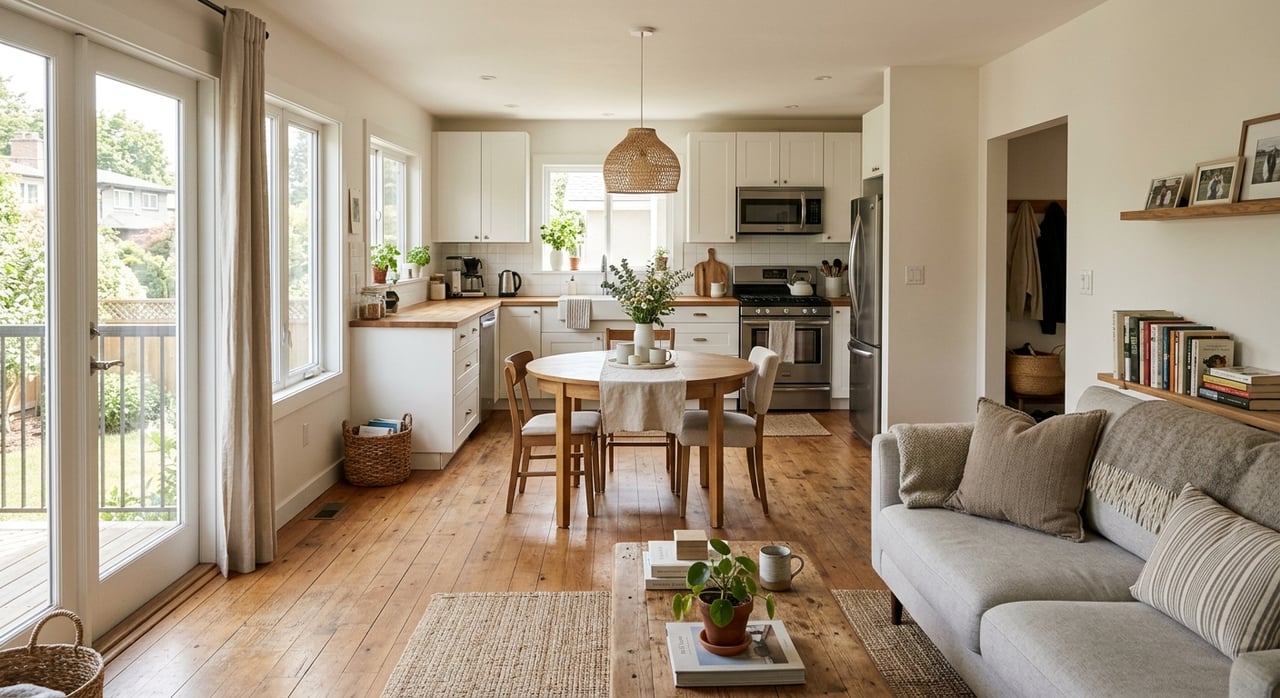
Smart Pricing Strategies For Cupertino Sellers
June 11, 2026
June 11, 2026
Wondering how to price your Cupertino home without leaving money on the table or scaring away serious buyers? You are not alone. In a market this competitive, the right list price is not just a number. It is a strategy. If you are preparing to sell, this guide will help you understand what Cupertino market data really means, which pricing mistakes to avoid, and how to position your home based on its exact location, property type, and condition. Let’s dive in.
Cupertino is still a strong seller-leaning market, but it is not one-size-fits-all. According to the Santa Clara County Association of REALTORS® April 2026 MLS report, single-family homes in Cupertino had a median price of $3.24 million, averaged 11 days on market, and received 110% of list price on average. That is faster and more aggressive than the countywide average of 16 days on market and 105% of list price received.
At the same time, condos and townhomes are moving differently. The same report shows Cupertino condo and townhome properties averaged 35 days on market, had a median price of $1.305 million, and sold at 100% of list price on average. That gap tells you something important right away: your pricing strategy should depend heavily on what you are selling.
A smart pricing strategy starts with recent closed sales. Active listings can show you the competition, but they do not tell you what buyers were actually willing to pay. Pending sales can offer clues, but closed sales are still the clearest starting point.
In Cupertino, this matters even more because buyers move quickly. Redfin reports that homes in Cupertino sell in about 10 days on average and receive around four offers. When the market moves that fast, launching at the wrong price can cost you early momentum before you have time to adjust.
It is tempting to look at a citywide median and use that as your benchmark. The problem is that Cupertino behaves more like a collection of micro-markets than one single pricing bucket. The City of Cupertino’s planning framework notes that the city has 12 identifiable neighborhoods with unique locations, development patterns, identity, and access to community services.
That local variation shows up in listing prices too. Realtor.com reports neighborhood median listing prices ranging from about $2.14 million in Northside to about $3.93 million in Rancho Rinconada, with several other Cupertino areas falling somewhere in between. That is a wide spread, and it is why a home on one street may need a very different pricing approach than a similar-looking home in another pocket.
If you want a realistic list price, your comp set should stay as close as possible to your home’s actual location and housing type. In practice, that usually means looking at sales from the same neighborhood cluster, similar streets, and similar homes, rather than pulling a broad Cupertino average.
Two homes with similar square footage can still attract different buyer response based on street feel, traffic exposure, privacy, and surrounding housing stock. The city’s General Plan and specific area planning reinforce that different parts of Cupertino function differently. Buyers notice those differences, and your pricing should reflect them.
Homes near the Stevens Creek Boulevard corridor can require extra pricing care. Cupertino’s Heart of the City Specific Plan covers about 635 acres along that corridor and is intended to guide future commercial, office, and residential development. The city also treats Stevens Creek Boulevard as a key transportation corridor.
For sellers, that means nearby location can shape buyer perception in more than one way. Some buyers may value access and convenience, while others may react to traffic exposure or changing development nearby. That does not automatically raise or lower value, but it does mean your pricing should account for the home’s exact setting rather than assume all Cupertino locations perform the same.
One of the biggest pricing mistakes in Cupertino is mixing property types. A single-family home and a condo may share the same city name, but the market is clearly treating them differently right now.
Here is what April 2026 data shows from SCCAOR:
| Property Type | Median Price | Avg. Days on Market | Avg. List Price Received |
|---|---|---|---|
| Single-family home | $3.24M | 11 | 110% |
| Condo/Townhome | $1.305M | 35 | 100% |
If you own a condo or townhome, pricing off nearby single-family sales can create unrealistic expectations. If you own a single-family home, using a condo-heavy sample can undercut your position. The buyer pool, pace, and negotiating range are different enough that each property type needs its own comp pool and launch strategy.
Condition is not just a marketing detail. It is a pricing lever. In Cupertino, buyers are still willing to compete strongly for homes that are well-prepared and well-positioned, especially in the single-family segment.
That said, visible updates, finish level, and deferred maintenance can affect how buyers respond. A turnkey home may have room to compete in a tighter pricing range, while a more dated home may need a more conservative list price or a clear story about renovation potential. In slower-moving segments like condos and townhomes, condition can matter even more because buyers may have more time and more options to compare.
Before setting your list price, it helps to ask:
These questions can help you decide whether to price aggressively, price conservatively, or improve the home before going live.
School geography can influence how buyers search, but it should be handled carefully. Cupertino Union School District includes schools across Cupertino and parts of neighboring cities, and Fremont Union High School District serves students from Cupertino and nearby areas as well. That means you should not assume every Cupertino address carries the same school-related pricing effect.
The safest approach is to confirm attendance area at the specific property address before treating it as part of your pricing strategy. For sellers, the main takeaway is simple: school geography can matter, but it should be verified at the address level, not generalized from the city name alone.
A lower list price can work in Cupertino, but only when it is intentional. In a market where Redfin reports that 85.2% of homes sold above list and SCCAOR shows Cupertino single-family homes receiving 110% of list price on average, a strategic price can help generate attention and create competition.
But lower is not always better. If the price is set too low without a strong launch plan, you may simply cap your upside instead of increasing it. The key is knowing whether your home is likely to attract enough demand in the first week or two to turn that lower price into stronger offer activity.
A more aggressive launch price may make sense when:
In those cases, pricing to attract broad attention can sometimes produce the exact result sellers want: faster activity and stronger offers.
Overpricing is still one of the fastest ways to lose leverage, even in a competitive market. Redfin reports that 16.1% of Cupertino homes had price drops. That is a reminder that buyers are paying attention, and they do not simply accept every aspirational list price.
The first one to two weeks matter most. If your home launches high and buyer response is weak, you may lose the sense of urgency that often drives strong offers. Price reductions later can help, but they rarely recreate the same momentum as a well-priced launch.
If your home does not attract strong activity early, pay attention to signals such as:
Those signs often mean the market is pushing back. In Cupertino, where homes can move quickly, waiting too long to adjust can cost you valuable time and negotiating strength.
If you are getting ready to sell, a smart pricing strategy usually follows a simple framework:
This process is not flashy, but it works because it reflects how buyers actually shop in Cupertino. Local competition, not national headlines, should drive your pricing decisions.
In Cupertino, smart pricing is about precision. The market is strong, but it is also nuanced. Single-family homes and condos are behaving differently, neighborhood pricing varies widely, and details like condition, street placement, and corridor exposure can all shape your result.
If you want the best possible outcome, treat pricing as a launch strategy, not a guess. The sellers who tend to do best are the ones who use recent sold data, stay grounded in the right micro-market, and adjust the strategy to fit the home they actually have.
If you are thinking about selling in Cupertino and want a pricing strategy built around your exact home and neighborhood, Taylor Lambert Group can help you map out the right next step.
Stay up to date on the latest real estate trends.


Housing Market Updates!

Etiam non quam lacus suspendisse faucibus interdum. Orci ac auctor augue mauris augue neque. Bibendum at varius vel pharetra. Viverra orci sagittis eu volutpat.