Condo And Townhome Living Near Downtown Mountain View
May 28, 2026
May 28, 2026
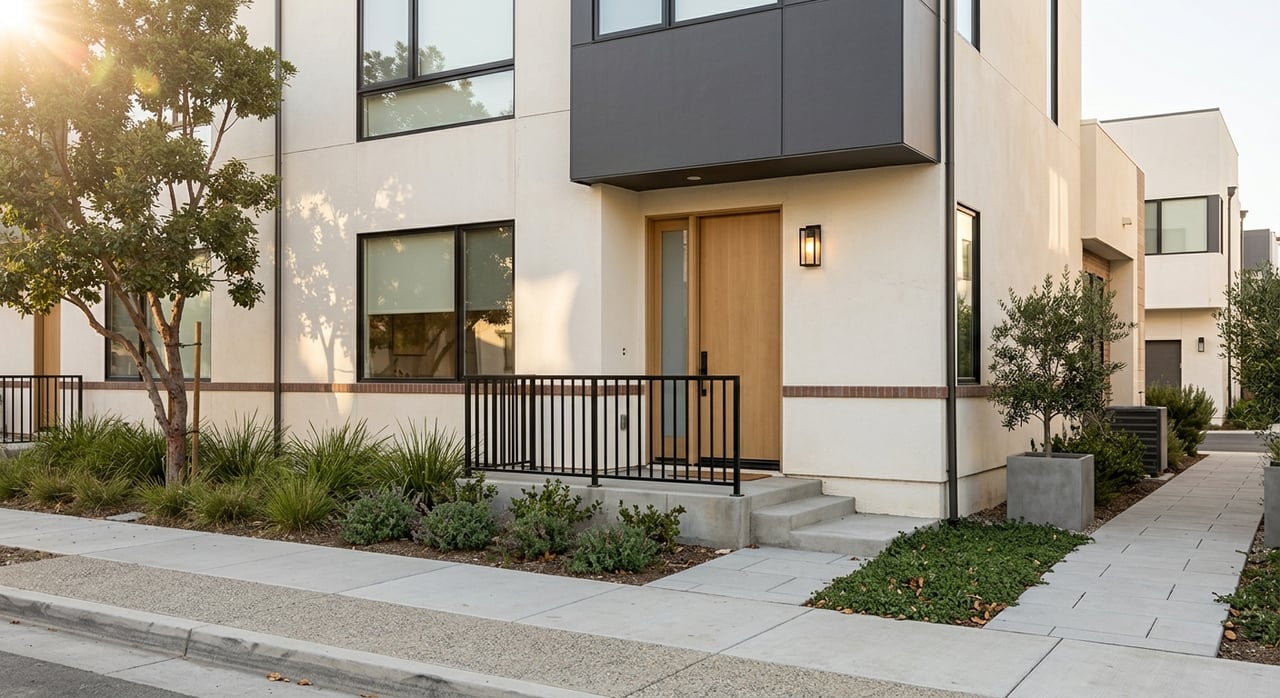
Looking for a home that puts you close to restaurants, transit, and the energy of downtown without the upkeep of a detached house? Condo and townhome living near downtown Mountain View can be a smart fit if you want convenience, a more car-light lifestyle, and a range of price points. In this guide, you’ll get a clear look at what makes the Castro Street area appealing, how condos and townhomes compare, and what tradeoffs to weigh before you buy. Let’s dive in.
Downtown Mountain View centers on Castro Street between Evelyn Avenue and El Camino Real. According to the city, this mixed-use area includes restaurants, shopping, performing arts, a civic center, and a plaza near transit. The city also created pedestrian malls on the 100, 200, and 300 blocks of Castro Street in 2022, which adds to the walkable feel.
This part of Mountain View also has a practical advantage for busy buyers. The city notes easy access to U.S. 101, State Highway 85, State Route 237, El Camino Real, and Central Expressway. If you want options beyond driving, downtown also offers sidewalks, bike lanes, trails, and direct access to the Downtown Transit Center.
The Transit Center is a big reason many buyers focus on this area. The city says it handles more than 12,000 boardings and alightings on a typical weekday and connects Caltrain, VTA light rail, buses, and shuttles. For you, that can mean an easier commute and more flexibility in how you move around the South Bay.
If you are comparing property types, the current price gap is important. Redfin’s late-May 2026 snapshot shows 48 active condos in Mountain View with a median listing price of $798,000. In the same snapshot, 35 active townhomes had a median listing price of $1.44 million.
That difference reflects how buyers often use these home types. Condos can offer an easier entry point into Mountain View, especially if being near downtown matters more than having extra square footage or a private garage. Townhomes usually cost more, but they often appeal to buyers who want more separation, more storage, and a home that feels closer to a traditional attached house.
Mountain View condos sit in the middle of the current South Bay and Peninsula range based on the research sample. Current condo medians were listed at $675,000 in San Jose, $728,000 in Santa Clara, $929,000 in Sunnyvale, and $1.5 million in Palo Alto. That gives you helpful context if you are balancing budget, commute, and location.
Condo pricing around downtown and central Mountain View covers a wide spread. In the current sample, examples ranged from the high $500,000s to the mid $700,000s for smaller or older units. Listings cited in the research include 363 Tyrella Ave Unit C at $599,000, 2025 California St #40 at $688,000, 1945 Mount Vernon Ct #4 at $718,000, and 100E Middlefield Rd 3H at $725,000.
Once you move into larger or more central downtown condos, pricing can jump into seven figures. For example, 108 Bryant St #30 sold for $1.4 million in April 2026, and 108 Bryant St #39 last sold for $1.301 million in 2019. That tells you location, building style, and unit size can change the math quickly.
In practical terms, one-bedroom condos can land in the mid $600,000s to mid $700,000s, while two-bedroom condos often sit in the high $600,000s to high $700,000s in the current sample. Larger downtown or downtown-adjacent two- and three-bedroom condos can move beyond the $1 million mark. If you are shopping in this segment, it helps to define early whether your priority is price, square footage, or a closer-in downtown setting.
Townhome pricing near central Mountain View is broader and generally higher. The current sample ranges from about $850,000 for 1924 Silverwood Ave to $2.158 million for 903 W Dana St. Other examples include 201 Flynn Ave #13 at $978,000, 1912 Montecito Ave #2 at $1.088 million, 154 Paseo Ct at $1.5 million, and 118 Minaret Ave at $1.749 million.
Newer townhomes can push pricing even higher. The research notes 2020-built townhomes in the broader Mountain View area selling around $1.77 million to about $2.0 million. If you are deciding between a condo and a townhome, this is where lifestyle and monthly costs need to be weighed together.
For many buyers, a townhome can justify the premium if you want features like a private garage, a balcony, or a layout with better indoor-outdoor flow. Still, the right fit depends on how often you will use that extra space and whether being close to downtown is your top priority.
One of the most useful things to know about downtown Mountain View housing is that the inventory is not one-note. The research sample includes condo and townhome buildings from 1965, 1973, 1979, 1989, 2000, 2002, 2008, 2018, and 2020. That means you are not just choosing a floor plan. You are often choosing between very different eras of design, maintenance expectations, and amenities.
Older condo communities may offer simpler layouts and, in some cases, broader shared amenities through the HOA. Newer buildings often feature more contemporary layouts and updated conveniences. Listing examples in the research show features such as elevators, secured or underground parking, storage, gated courtyards, and more open floor plans.
For example, 240 View St includes elevator access, two underground parking spaces, storage, and a gated courtyard. By comparison, 1721 California St #1 is in a 28-unit community with a pool and gated parking. Neither setup is automatically better. It depends on whether you value newer finishes, larger shared amenities, or a lower entry price.
Townhomes show a similar mix. The research references older communities from the late 1970s as well as 2020-built townhomes in the broader Mountain View area. If you want something that feels more current in design, newer townhomes may offer stronger indoor-outdoor flow, balconies, and private garages.
A big reason buyers choose condos and townhomes near downtown Mountain View is the lower day-to-day maintenance compared with a detached home. That tradeoff is real, but it comes with monthly HOA dues that need to be factored into your budget. In the reviewed downtown-adjacent examples, HOA dues clustered around roughly $550 to $658 per month.
The research cites 201 Flynn Ave #13 at $550 per month, 240 View St at $575, 1721 California St #1 at $608, and 108 Bryant St #30 at $658. Common inclusions across these examples were water, garbage, insurance, exterior maintenance, reserves, and sometimes amenities like a pool, spa, tennis, roof maintenance, or shared storage.
This is where buyers sometimes need a mindset shift. Low-maintenance does not always mean low-cost. It usually means less exterior upkeep and more shared responsibility. If you are comparing a condo or townhome to a detached home, make sure you are looking at the full monthly carrying cost, not just the purchase price.
Downtown Mountain View has strong appeal if you want to rely less on your car. The city describes downtown as walkable and mixed-use, and the Transit Center supports Caltrain, VTA, buses, and biking connections. The city also offers rent-free short-term bike storage at the Transit Center, which is a nice practical perk for regular riders.
That said, parking is still a real part of the decision. The research notes that parking is an ongoing city focus in downtown, which reflects the tradeoff that often comes with a central location. You get convenience and activity, but you also want to think carefully about your building’s parking setup and your day-to-day habits.
Parking configurations vary by property. Some homes include one assigned garage space, others include two underground or assigned spaces, and some townhomes offer attached or detached garages plus guest parking. If you have two cars, frequent visitors, or a hybrid commute, this detail deserves extra attention before you write an offer.
If your main goal is getting close to downtown at a lower price point, a condo may be the better starting point. You may be able to get into Mountain View with a smaller footprint and still enjoy walkability, transit access, and lower maintenance. That can be especially appealing if you spend more time out in the city than working on a home.
If you want more privacy, more storage, or a layout that feels closer to a single-family home, a townhome may be worth the higher price. In many cases, you are paying for more functional space and features like garages or balconies. That can make daily life easier if you work from home, need room to grow, or simply want more separation between living areas.
A smart home search in this area usually comes down to a few questions:
When you answer those clearly, the right choice becomes much easier to spot.
Near downtown Mountain View, small differences can have a big effect on value. A building’s age, parking arrangement, HOA structure, and distance to the Castro Street core can all change how a home feels and how it fits your budget. On paper, two homes may look similar. In person, they can live very differently.
That is why it helps to work with a team that can break down the tradeoffs in plain language. Taylor Lambert Group’s approach is education-first and neighborhood-focused, which is especially useful in a market where inventory spans everything from older garden-style condos to newer infill townhomes. When you understand what drives price and lifestyle in each pocket of Mountain View, you can make a more confident move.
If you are thinking about buying or selling near downtown Mountain View, Taylor Lambert Group can help you compare options, understand the numbers, and build a plan that fits your goals.
Stay up to date on the latest real estate trends.



Housing Market Updates!
Etiam non quam lacus suspendisse faucibus interdum. Orci ac auctor augue mauris augue neque. Bibendum at varius vel pharetra. Viverra orci sagittis eu volutpat.