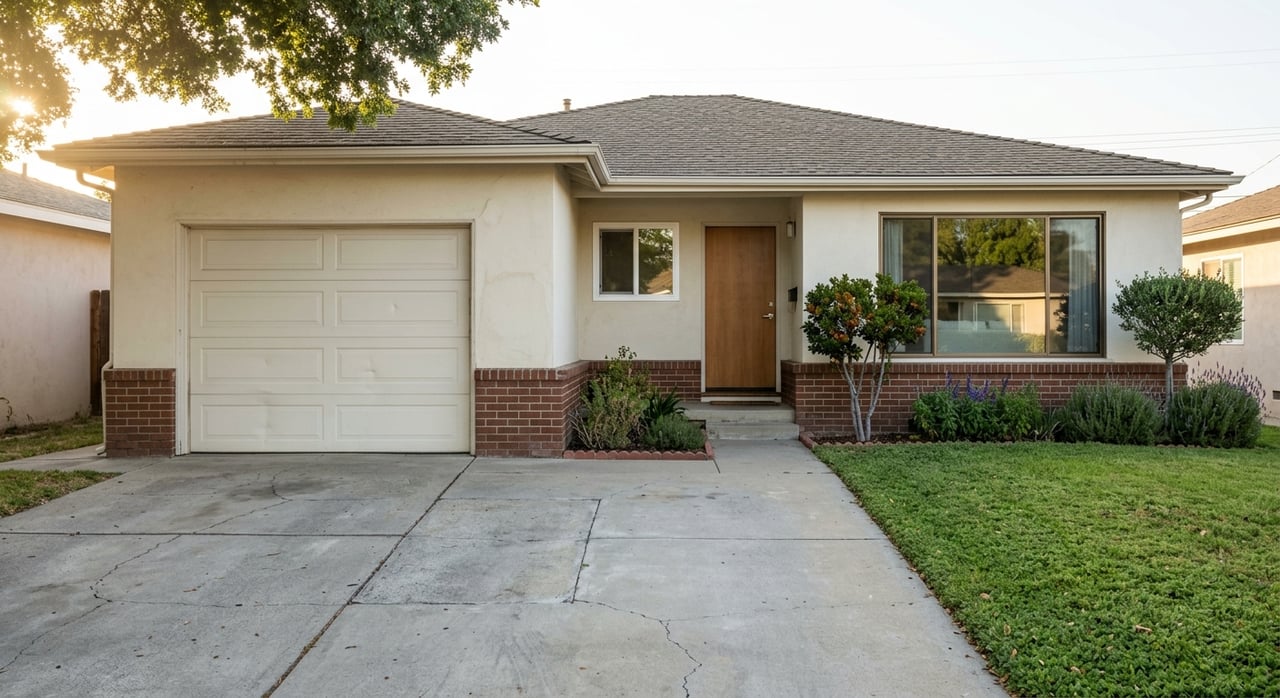
Cupertino Fixer-Upper Or Move-In Ready? How To Decide
June 4, 2026
June 4, 2026
If you are home shopping in Cupertino, one question can shape your entire search: should you buy a fixer-upper or pay more for a move-in ready home? In a market where homes sell fast and competition stays high, that choice is not just about style. It is about your timeline, your risk tolerance, and how much uncertainty you are willing to manage. Let’s break down how to decide with more confidence.
In many cities, a fixer-upper might feel like the obvious budget play. Cupertino is different. Redfin reported a March 2026 median sale price of $3.359 million, with homes averaging 4 offers, a 9-day median time on market, and a 108.5% sale-to-list ratio.
That pace matters because it affects both kinds of homes. Move-in ready listings often attract the strongest competition, but older homes with renovation potential can also draw serious interest if the location and lot are compelling. In other words, buying a fixer in Cupertino does not automatically mean you are avoiding competition.
Cupertino’s housing stock also helps explain why this decision comes up so often. According to the city’s 2024 Housing Element Technical Report, 57% of housing units are single-family detached, and about 77% of homes were built in 1989 or earlier. That means many buyers will look at homes that may be perfectly livable but still show their age in systems, layout, or finishes.
A fixer-upper in Cupertino can mean very different things from one property to the next. Some homes need mostly cosmetic updates like paint, windows, or finishes. Others may need more substantial work involving roofs, siding, plumbing, or larger rehabilitation.
The city’s technical report notes common repair needs such as roofs, siding repair, paint, cracked or inoperable windows, and plumbing systems. At the same time, the city estimates that fewer than 5% of units need rehabilitation, and only 1 to 2 homes may be unsafe for habitation. That is an important reminder: older does not always mean distressed.
In Cupertino, a fixer can generally fall into three buckets:
This distinction matters because the right strategy for each type is completely different. A cosmetic fixer may fit a buyer who wants to personalize a home over time. A major rehab or redevelopment project usually requires a much bigger cushion for money, time, and decision-making.
Because much of Cupertino developed between the 1960s and 1990s, many homes reflect older materials, older floor plans, and deferred maintenance at varying levels. The city also points to specific examples that show how varied the local housing stock can be.
For example, Rancho Rinconada is described in the city report as an area with 1950s workforce housing, with typical homes around 800 square feet on roughly 4,700- to 5,100-square-foot lots. The report also notes that older neighborhoods such as Monta Vista Village and parts of South Blaney likely need greater rehab investment. These examples help explain why one Cupertino fixer might be a straightforward remodel while another may require a much deeper level of work.
The city’s sites inventory also references older homes in Monta Vista North from 1947 to 1954, some described as aged or borderline dilapidated, while others from a similar era are described as being in good condition. That is why broad assumptions rarely work here. Two homes with similar ages can have very different renovation needs.
In Cupertino, move-in ready usually buys more than fresh finishes. It often buys certainty.
A turnkey home can reduce the number of unknowns after closing. You may avoid a long renovation schedule, permit delays, and the surprise costs that can come with opening walls in an older property. In a fast market, that peace of mind is a big reason many buyers are willing to compete aggressively for updated homes.
Redfin’s current city data suggests most homes get multiple offers, and hot homes can sell about 14% above list in around 8 days. That kind of market tends to reward homes that feel easy to buy and easy to occupy. If you need a defined move date or simply do not want to manage contractors, move-in ready may be worth the premium.
One of the biggest differences between buying a fixer and buying turnkey in Cupertino is what happens after closing. Many buyers focus on renovation cost but underestimate permit timing and project complexity.
Cupertino’s building page says counter plan reviews are for small projects only, and if plans are complete, a building permit can be issued the same day. But for broader single-family work and ADUs, ministerial review is usually 2 to 4 weeks. For discretionary approvals involving two-story homes, subdivisions, townhomes, or small-lot homes, approvals can take roughly 3 to 9 months depending on scope.
That range can have a major effect on your budget and your daily life. If you are planning significant improvements, your true cost is not just materials and labor. It may also include carrying costs, extra rent, delayed move-in, and the mental load of a longer project.
A fixer-upper may be the better fit if you value customization and can handle more moving parts. In Cupertino, this option makes the most sense when you are buying for the long term and can stay flexible.
You may want to lean fixer-upper if:
This path can work especially well when the underlying property has lasting appeal beyond its current condition. In Cupertino, that often means a home where the lot, layout potential, or location supports the investment.
A move-in ready home may be the smarter fit if your top priority is speed, predictability, or lower project stress. That is often the case for busy professionals, relocation buyers, or anyone who needs a clear occupancy plan.
You may want to lean move-in ready if:
In Cupertino, that convenience often comes at a premium. But for many buyers, the trade-off is worth it because it reduces friction in a market that already moves quickly.
This is where many buyers get tripped up. A lower list price on a fixer-upper can look attractive, but the real comparison is not fixer price versus turnkey price. It is total acquisition cost versus total ready-to-live cost.
When you evaluate a fixer, look at the full picture:
That last point is especially important in an older housing market. While Cupertino says only a small share of homes need major rehabilitation, older homes can still reveal hidden costs once work begins. A home that looks manageable on day one can become more expensive if systems, windows, siding, or plumbing need more attention than expected.
If you feel stuck, use this basic framework: time and certainty versus customization and renovation risk.
If you want control over finishes and can absorb delays, the right fixer-upper may create a better long-term fit. If you want a smoother path with fewer unknowns, move-in ready may help you move faster and sleep better.
Neither path is automatically better in Cupertino. The better choice is the one that fits your finances, your timeline, and how much complexity you want to take on after closing.
When you are buying in a market this competitive, clarity matters. A smart strategy starts with knowing what kind of project you are truly signing up for, and what trade-offs you are comfortable making.
If you want help weighing your options in Cupertino, the team at Taylor Lambert Group can help you compare properties, pressure-test your plan, and move forward with a strategy that fits your goals.
Stay up to date on the latest real estate trends.


Housing Market Updates!
Etiam non quam lacus suspendisse faucibus interdum. Orci ac auctor augue mauris augue neque. Bibendum at varius vel pharetra. Viverra orci sagittis eu volutpat.