Life Between Stadium And Startups In Santa Clara
July 2, 2026
July 2, 2026
What does it feel like to live in a place where NFL game days, big-tech workdays, and new mixed-use development all shape the same stretch of Santa Clara? If you are considering a move here, or just trying to understand how this part of the city is changing, that question matters. The north-central corridor of Santa Clara offers a mix of event energy, daily convenience, and housing variety that feels different from more traditional suburban pockets. Here’s a practical look at what life between stadium and startups in Santa Clara can really look like.
Santa Clara’s north-central corridor is anchored by Levi’s Stadium and a growing cluster of office, research, and mixed-use projects. The city identifies major tech employers in Santa Clara such as Applied Materials, AMD, Intel, Nvidia, and Ericsson, alongside major entertainment destinations including California’s Great America and Levi’s Stadium.
That combination gives this area a distinct identity. It is not just a residential area, and it is not just a job center. Instead, it functions more like an evolving urban corridor where work, housing, recreation, and large-scale events all overlap.
Levi’s Stadium is the area’s most visible landmark, and it does more than host football. Since opening in 2014, the venue has hosted NFL games, domestic and international soccer, college football, motocross, concerts, and civic events.
For you as a resident or buyer, that means the area can feel very different depending on the day. A regular weekday may bring office traffic and daily errands, while an event day can bring heavier crowds, more activity, and changes to circulation near the stadium.
This is one of the most important lifestyle details to understand. The city has noted that the San Tomas Aquino Creek Trail will close on all six FIFA World Cup match days in June 2026, with posted bike and pedestrian detours.
That update is a good example of how access around the stadium district can shift during major events. If you like to walk, bike, or plan your routine around trail access, it helps to know that this area can change quickly when large events are on the calendar.
The city describes more than $9 billion in projects on the horizon near Levi’s Stadium. That scale helps explain why this part of Santa Clara feels like a place in transition rather than a finished, fully uniform neighborhood.
One major project is Related Santa Clara, a 9.2 million-square-foot mixed-use district next to Levi’s Stadium. Plans include 1,680 homes, 700 hotel rooms, a 30-acre city park, office space, retail and entertainment uses, and a globally inspired food market.
Santa Clara Square is another major piece of the corridor. Spanning about 93 acres, it includes office, retail, mixed-use, and residential space, with a market anchor, four restaurant pads, and up to 1,840 apartments.
If you drive through this part of Santa Clara, you may notice that one block feels established while the next feels newer or still in progress. That is consistent with the city’s planning documents and project statuses.
Several headline developments are approved, planned, or still being amended rather than fully built. In practical terms, that means the corridor is changing phase by phase, not all at once.
If you are drawn to convenience, this part of Santa Clara has a lot going for it. The area already includes a mix of office-retail centers, neighborhood open space, and active-recreation options that support day-to-day living.
You are not relying on one classic main street here. Instead, the dining and retail pattern is shaped by mixed-use nodes, where residential, office, and commercial uses are planned together.
Related Santa Clara is planned to include restaurants, entertainment venues, hotels, retail, and office space. Santa Clara Square’s retail center already includes a market and restaurant pads.
The city’s land-use framework also treats restaurants, cafes, and neighborhood-serving retail as standard uses in mixed-use and commercial districts. That helps explain why this area feels more urban and connected than a typical office park environment.
Even with the stadium and office presence, outdoor access remains a key part of the lifestyle. Ulistac Natural Area is a 40-acre preserve along the Guadalupe River, offering a more natural contrast to the surrounding development.
Lick Mill Park adds neighborhood-scale recreation with a playground, basketball and tennis courts, picnic and BBQ facilities, restrooms, and reservable spaces. Santa Clara Youth Soccer Park and the San Tomas Aquino Creek Trail add more active-use options nearby.
For trail users, the San Tomas Aquino Creek Trail is open in four segments from the San Francisco Bay Trail to Cabrillo Avenue, with access from the Tasman Parking Garage. If outdoor access is part of your routine, these nearby options can make a real difference.
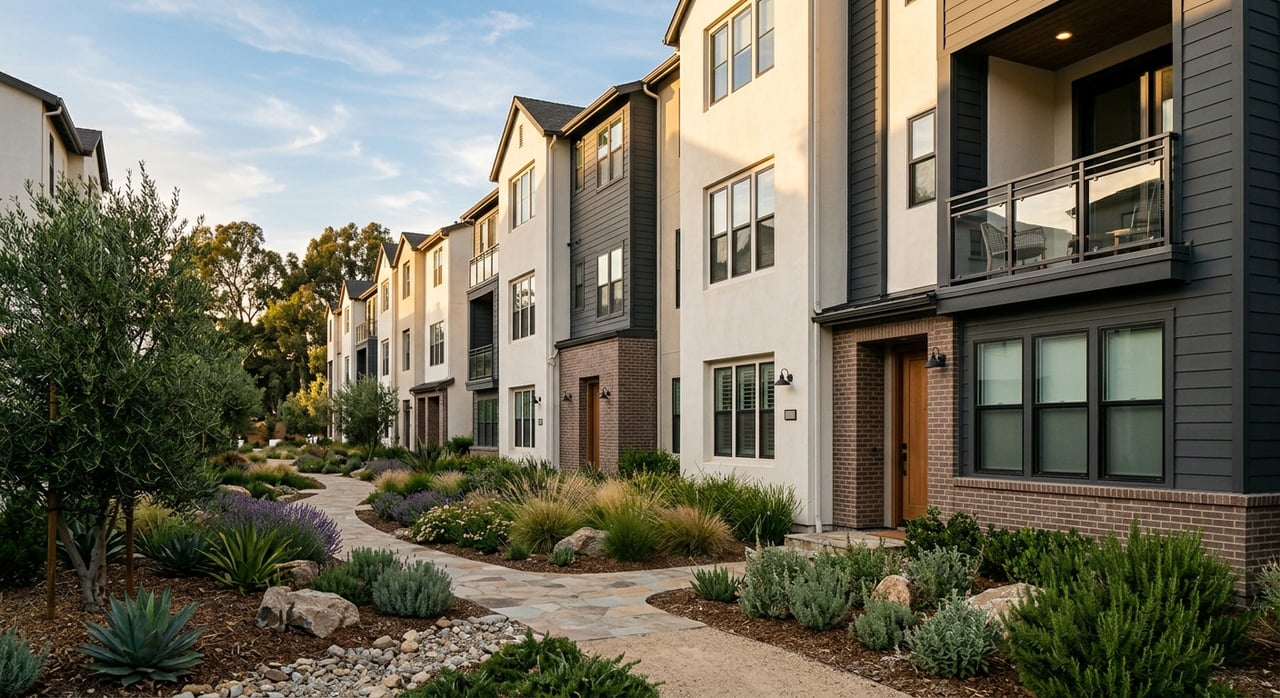
One of the biggest questions buyers ask is simple: what kind of homes are actually here? In this part of Santa Clara, the answer is variety, with a strong tilt toward multifamily and mixed-use housing in the growth corridors.
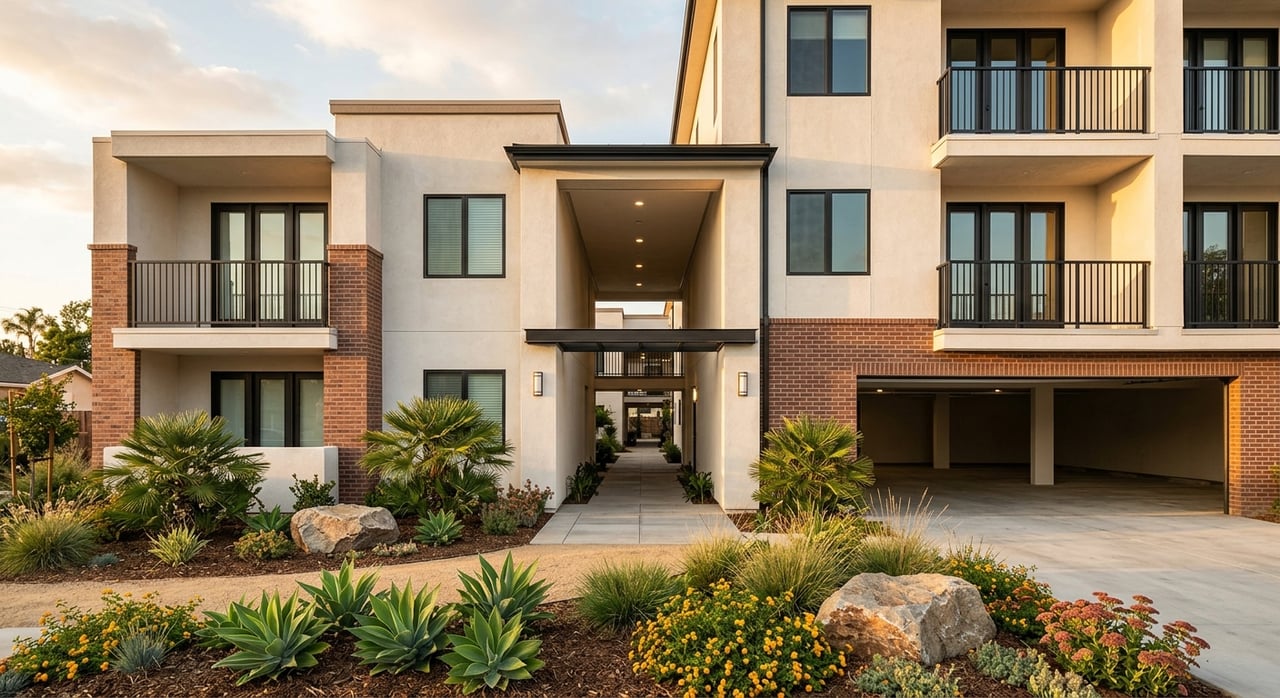
The city’s land-use classifications include single-family detached homes, townhomes and rowhouses, low-rise apartments, and high-density mid-rise buildings. In areas near transit and mixed-use development, the city says high-density residential often has an urban feel, with mid-rise buildings, shared open space, and structured or below-grade parking.
Several major projects reflect that direction. Santa Clara Square allows up to 1,840 apartments, while Related Santa Clara includes 1,680 residential units.
Other nearby projects continue that pattern. Tasman East is a 45-acre industrial area being converted into a high-density transit-oriented neighborhood and is being amended to allow 1,500 additional units. Freedom Circle’s approved plan includes up to 1,100 homes, and Mission Point calls for 1,800 homes alongside office and lab space.
If you want newer housing close to major employers, transit service, and entertainment, this corridor may offer options that fit your goals. Condominiums, townhome-style living, apartments, and other higher-density formats are a meaningful part of the area’s growth.
If you prefer a more established, lower-density streetscape, your search may need to widen beyond the newest mixed-use clusters. This is an area where your block-by-block priorities matter, especially if you are comparing lifestyle, building type, and traffic patterns.
Planning documents point in a clear direction. Santa Clara’s El Camino Real plan aims to transform automobile-oriented strip malls into a more tree-lined, pedestrian- and transit-oriented corridor with a mix of residential and retail uses.
The Santa Clara Station Area Specific Plan is also active, with vision pillars that include mobility and connectivity, district development and economic vitality, placemaking and public realm, and sustainability and infrastructure. The General Plan’s station-area classification contemplates roughly 1,650 homes and 2 million square feet of non-residential space, including hotels.
VTA says the Orange Line serves Levi’s Stadium and connects with Caltrain at Mountain View Station. Caltrain directs riders to transfer to VTA service for Great America Station.
That transit access helps define the area’s identity. If you value transportation options beyond driving, this part of Santa Clara stands out for its connection to rail and event-serving transit service.
The best way to describe it is this: Santa Clara’s stadium-and-startups corridor feels dynamic, convenient, and still in transition. You have major employers, large entertainment venues, planned parks, mixed-use projects, and evolving transit-oriented development all working together in one part of the city.
At the same time, it is not one single experience from end to end. Some pockets feel more established, some feel more urban, and some reflect active development or event-day impacts more than others.
That is why local guidance matters when you are buying or selling here. Understanding the difference between one section of the corridor and the next can help you choose a home that fits your daily routine, long-term plans, and comfort with change.
If you are exploring Santa Clara and want help understanding how this corridor compares with other parts of the South Bay, the Taylor Lambert Group can help you evaluate housing options, neighborhood feel, and timing with a local, education-first approach.
Stay up to date on the latest real estate trends.


Deals of the week!

Housing Market Updates!

Etiam non quam lacus suspendisse faucibus interdum. Orci ac auctor augue mauris augue neque. Bibendum at varius vel pharetra. Viverra orci sagittis eu volutpat.