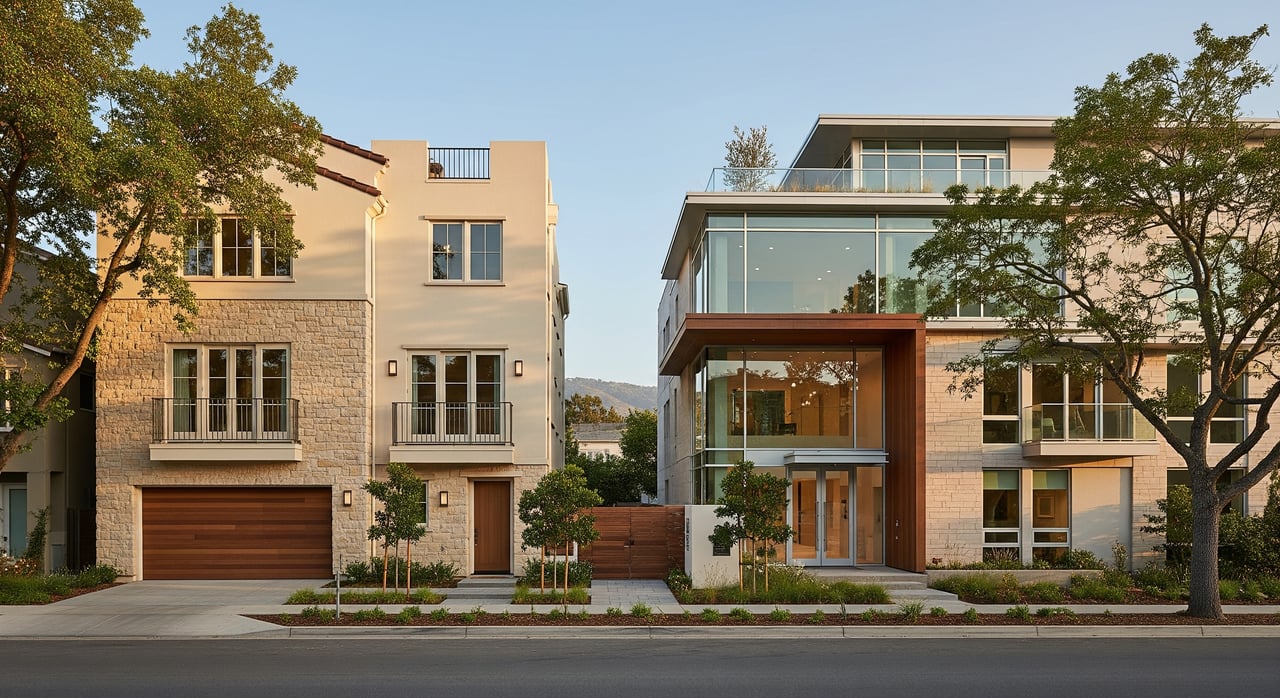
Condo Vs. Townhouse In San Jose
December 18, 2025
December 18, 2025
Trying to choose between a condo and a townhouse in Willow Glen’s 95125? You are not alone. Both options can work well in this walkable, amenity-rich part of San Jose, but the ownership structure, HOA rules, and maintenance responsibilities shape your monthly costs and day-to-day lifestyle. In this guide, you will see how condos and townhomes differ in 95125, what that means for your budget, and how to evaluate HOA documents with confidence. Let’s dive in.
A condo is a legal form of ownership. You own the interior of your unit and share an undivided interest in common areas like land, exterior walls, roofs, landscaping, and parking. In California, condos operate under the Davis-Stirling Common Interest Development Act, which sets standards for HOA budgets, reserves, meetings, and disclosures.
A townhouse describes a style, not a single legal form. In 95125, a “townhouse” might be a condo in legal terms or a fee simple lot where you own the land and structure. The recorded CC&Rs and the subdivision or condo map determine who maintains the roof, exterior, and shared spaces. Do not rely on marketing labels alone.
Key documents that define responsibilities include the CC&Rs, HOA bylaws, the condominium plan or subdivision map, current budget, reserve study, insurance summary, and meeting minutes. These explain what the HOA covers, any rental or pet rules, and the potential for special assessments.
Your total monthly housing cost includes:
Condos often carry higher HOA dues than small townhouse communities because condo HOAs typically fund exterior maintenance, roofs, building systems, and sometimes water or trash. Fee simple townhome HOAs can have lower dues if owners are responsible for their own exteriors and roofs, although dues rise in communities with extensive amenities.
Insurance varies by structure. Condo owners usually carry HO-6 coverage that protects interior finishes and personal property. Fee simple townhome owners generally carry HO-3 policies that include the structure and exterior, since they often maintain those components. In both cases, consider loss assessment coverage to protect against HOA deductibles or assessments after a covered loss.
A simple template to compare options:
In a typical condo, the HOA handles the exterior envelope, roof, foundations where common, shared mechanical systems, elevators, parking, landscaping, exterior lighting, and sometimes trash or water. You maintain interior walls, flooring, appliances, and in-unit systems that serve only your unit.
For a fee simple townhouse with an HOA, the HOA often maintains common roads, shared landscaping, and amenities like pools or gates. You typically maintain your roof, exterior walls, window frames, patios, and fencing. If the townhouse is legally a condo, then the condo maintenance rules usually apply. Always confirm the line in the CC&Rs.
Insurance follows the responsibility line. Many HOAs carry master policies that are either bare walls-in or all-in. Your personal policy fills the gaps for interior finishes and personal property, and a loss assessment endorsement helps if the HOA levies a special charge after a covered incident. Fee simple townhome owners should confirm that their HO-3 limits fit the full replacement needs of the exterior and roof.
Financing can differ between condos and fee simple townhomes. Many lenders evaluate condo projects at the building or HOA level, and some loans require the project to meet eligibility standards. If a project does not qualify, buyers using those loan types may be unable to finance there. Fee simple townhouses are usually financed like single-family homes and do not face the same project-level constraints.
HOA dues affect your qualifying power. Underwriters consider HOA dues when calculating debt-to-income ratios, which can reduce your maximum loan amount if dues are high. Lenders may also look at investor concentration and owner-occupancy levels in condo communities.
On resale, condos can appeal to buyers who want low maintenance and walkable access to shops and dining. Townhomes often attract buyers who want a bit more privacy, a front door to the street, and outdoor space with fewer single-family maintenance chores. Marketability is also shaped by parking availability, private outdoor areas, HOA rules, the condition of shared components, and the HOA’s financial health.
Willow Glen is known for its established, pedestrian-friendly streets and downtown Lincoln Avenue. You will find a mix of older garden-style condo buildings and newer townhouse developments. Age and construction type influence HOA needs and insurance, so review recent reserve studies and planned projects carefully, especially for older buildings that may face roof replacements or exterior work.
Parking is a real value driver in walkable pockets. Assigned garage or dedicated parking can make a condo more attractive, even with higher dues. Townhomes that deliver private patios or small yards can bridge the gap between condo living and a detached home. Proximity to transit corridors and major employment hubs across the South Bay can also shape demand.
Choose a condo if you want a lower-maintenance lifestyle and are comfortable with higher dues that cover exterior care and common systems. Choose a fee simple townhome if you want more control over your exterior and roof, potentially lower dues, and a living experience closer to a single-family home. Either way, the best fit in 95125 comes down to the HOA’s responsibilities, financial health, and how the rules align with your plans.
If you want help mapping costs, reading CC&Rs, or comparing specific communities in Willow Glen, our team is here to guide you. Reach out to the Taylor Lambert Group for a clear, local perspective that supports confident decisions.
Stay up to date on the latest real estate trends.



Housing Market Updates!
Etiam non quam lacus suspendisse faucibus interdum. Orci ac auctor augue mauris augue neque. Bibendum at varius vel pharetra. Viverra orci sagittis eu volutpat.