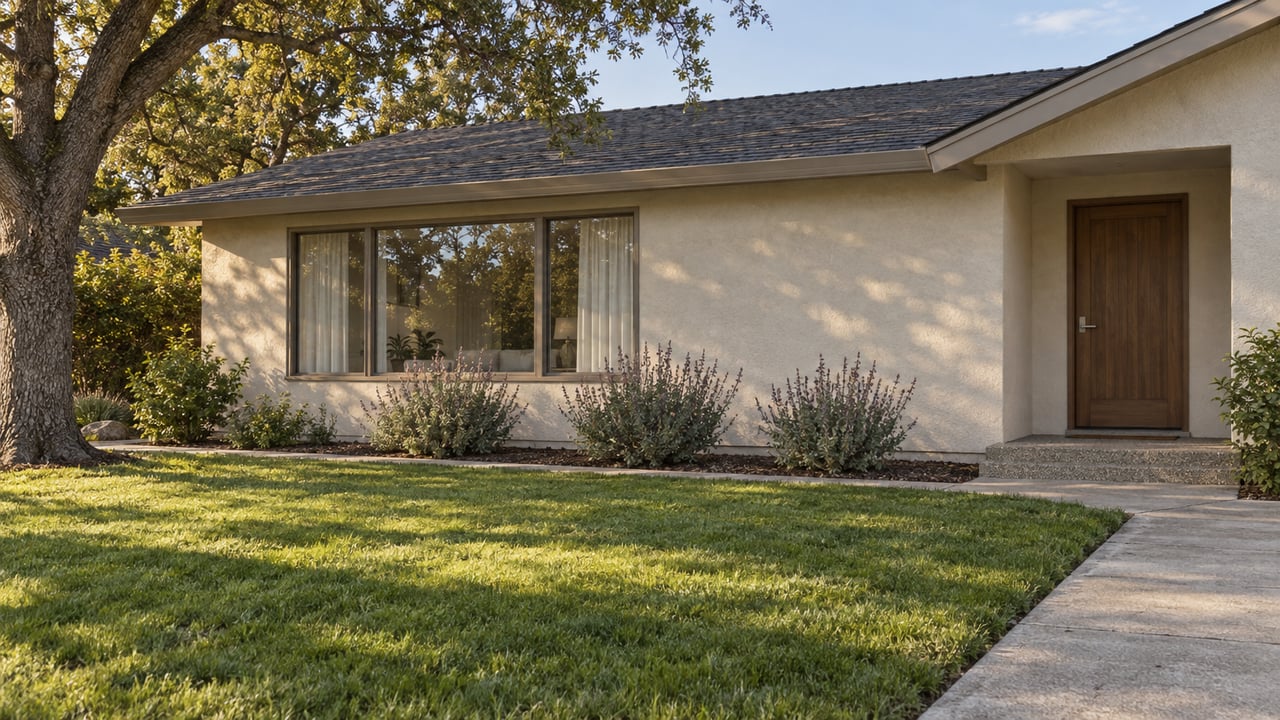
Almaden Valley's Median Sits Just Below San Jose's $2.3 Million Tax Line. Here's Why One Extra Dollar Matters
November 5, 2026
November 5, 2026
Would you take $2,310,000 for your house over $2,300,000? Most sellers say yes before the second number is finished. In Almaden Valley, the $2,300,000 offer can leave you with more money.
The reason is San Jose's Measure E. It's a real property transfer tax that applies to the whole sale price once a sale goes past a set threshold. Voters approved it in 2020 for sales that equaled or exceeded $2,000,000. Since July 1, 2025, the line has been $2,300,000. In ZIP 95120, the median single-family sale price in October 2026 was $2,127,500, so the line sits just above where a typical home in the area sells.
Most taxes people deal with are marginal, meaning the higher rate applies only to the dollars above a bracket. Measure E is different. The Santa Clara County Clerk-Recorder's Measure E page says the tax applies to transfers of San Jose property "when the value of the consideration exceeds $2,300,000," and that the rate is "applied to the full value of the consideration."
The tiers in effect since July 1, 2025:
The county gives its own example. An $11,000,000 sale is taxed at 1.5% on the full $11,000,000, which comes to $165,000. Apply the same rule at the bottom tier and the cliff appears. A sale at exactly $2,300,000 owes no Measure E tax. A sale one cent higher owes 0.75% of everything, which is about $17,250.
The table below covers Measure E alone, at the county's published 0.75% rate.
| Sale price | Measure E at 0.75% | Price minus Measure E |
|---|---|---|
| $2,300,000 | $0 | $2,300,000 |
| $2,300,001 | about $17,250 | about $2,282,751 |
| $2,310,000 | $17,325 | $2,292,675 |
| $2,317,400 | about $17,381 | about $2,300,020 |
| $2,350,000 | $17,625 | $2,332,375 |
If the Measure E bill comes out of the seller's proceeds, any price between $2,300,000.01 and about $2,317,400 leaves less money than a clean $2,300,000. Above that point, the higher price is worth more again. Sellers generally have no reason to accept a price in that band unless something else in the offer makes up the difference, and a buyer pricing an offer with the line in mind would avoid it too.
San Jose is a big city, and most of it sells well below this line. In October 2026, the citywide single-family median was $1,579,000. In ZIP 95118 it was $1,585,000, and in ZIP 95123 it was $1,355,000. A seller in most of those neighborhoods would need an unusually strong offer to get anywhere near $2.3 million.
ZIP 95120 is different. The October 2026 median was $2,127,500, down 3.8% from a year earlier. The average sale was $2,090,307 across 26 closed single-family sales, and homes sold at a median of $940 per square foot. At that rate, a house of roughly 2,450 square feet would land right at the $2.3 million line, which is an ordinary size for the area's homes. The line doesn't sit far above Almaden Valley prices. It sits just past the middle of them.
The pace of the market makes it more likely that sales land near the line. In October 2026, 95120 single-family homes sold at a 100% sale-to-list ratio after a median of 16 days on market, with 1.6 months of inventory. At list price with little room either way, a home listed at $2,249,000 that draws two offers could easily end up negotiating right through the dead zone.
Measure E doesn't say whether the buyer or the seller pays. The City Attorney's impartial analysis in the March 2020 ballot materials says the tax may be paid by either party, and that it adds to San Jose's existing conveyance tax rather than replacing it.
That gives a deal near $2.3 million an extra thing to negotiate. A buyer who agrees to pay the Measure E bill has changed the math in the table above, and the dead zone moves to the buyer's side. A seller comparing two offers on either side of the line needs to know who is paying the tax before comparing the prices.
The regular transfer taxes come due on a change of ownership unless an exemption applies. According to the Clerk-Recorder's recording page, the county documentary transfer tax is $0.55 per $500 or fractional portion of value. Properties in San Jose, Palo Alto and Mountain View are taxed at a combined $1.65 per $500, which covers the county tax and the city conveyance tax, and both are collected at recording. On a $2,300,000 San Jose sale, the combined rate comes to $7,590. That amount climbs by $1.65 for each additional $500 of price, so Measure E is the only part of the bill that jumps by thousands at a single price.
In June 2026, San José Spotlight reported that a Howard Jarvis Taxpayers Association initiative headed for the November ballot would have capped local transfer taxes and applied retroactively, which would have voided Measure E. If you read that story and assumed the cliff was about to disappear, it's worth checking again.
That initiative isn't what voters saw on the November 3 ballot. CalMatters reports that a last-minute deal between the initiative's backers and legislative leaders replaced it with Proposition 43. That measure "is limited to the vote threshold and does not apply retroactively to taxes such as the mansion tax." The Legislative Analyst's Office describes Prop. 43 as requiring two-thirds voter approval for new, increased or extended local special taxes proposed by voters, beginning January 1, 2027. Whatever the final count shows, Prop. 43 doesn't reach back to an existing tax like Measure E. The $2.3 million line still applies to Almaden Valley sales.
The line will move eventually. The county notes that the exemption threshold adjusts for inflation every five years, and $2,300,000 is the first adjusted figure, effective July 1, 2025. On that schedule, today's line holds until the next adjustment, five years after that date.
Los Angeles has a much larger version of the same tax, Measure ULA, sometimes called the "mansion tax." A UCLA Lewis Center study from April 2025 found that the odds of a sale happening above ULA's threshold fell by about 50%. ULA's rates are much higher than San Jose's 0.75%, so the size of that effect doesn't carry over. The mechanism is the same, though. When a tax jumps at a fixed price, sales become less likely just above it.
In Almaden Valley, the practical effect shows up in a few places during a sale:
This post is general information about how a published tax works. It isn't legal, tax or financial advice, so confirm how Measure E applies to your sale with your escrow officer or a tax professional. For questions about the tax itself, the county's Measure E page directs readers to the City of San Jose's Department of Finance.
Almaden Valley is part of San Jose, so yes. The tax covers transfers of real property in San Jose that exceed $2,300,000.
No. The original 2020 threshold was $2,000,000. Since July 1, 2025, it has been $2,300,000.
The same cliff repeats at a higher rate. Sales from $5,000,000.01 to $10,000,000 pay 1% of the full price, and sales over $10,000,000 pay 1.5%.
Not for existing taxes. According to CalMatters, the final measure doesn't apply retroactively, and the LAO says its two-thirds rule starts January 1, 2027.
If your Almaden Valley home might sell somewhere between $2.2 and $2.4 million, it's worth knowing which side of the line your pricing points toward before you list. Taylor Lambert Group can run a free home valuation and show you what offers in that range would actually net, so you can set your price with Measure E already accounted for.
Stay up to date on the latest real estate trends.

Deals of the week!


Deals of the week!

Housing Market Updates!
Etiam non quam lacus suspendisse faucibus interdum. Orci ac auctor augue mauris augue neque. Bibendum at varius vel pharetra. Viverra orci sagittis eu volutpat.