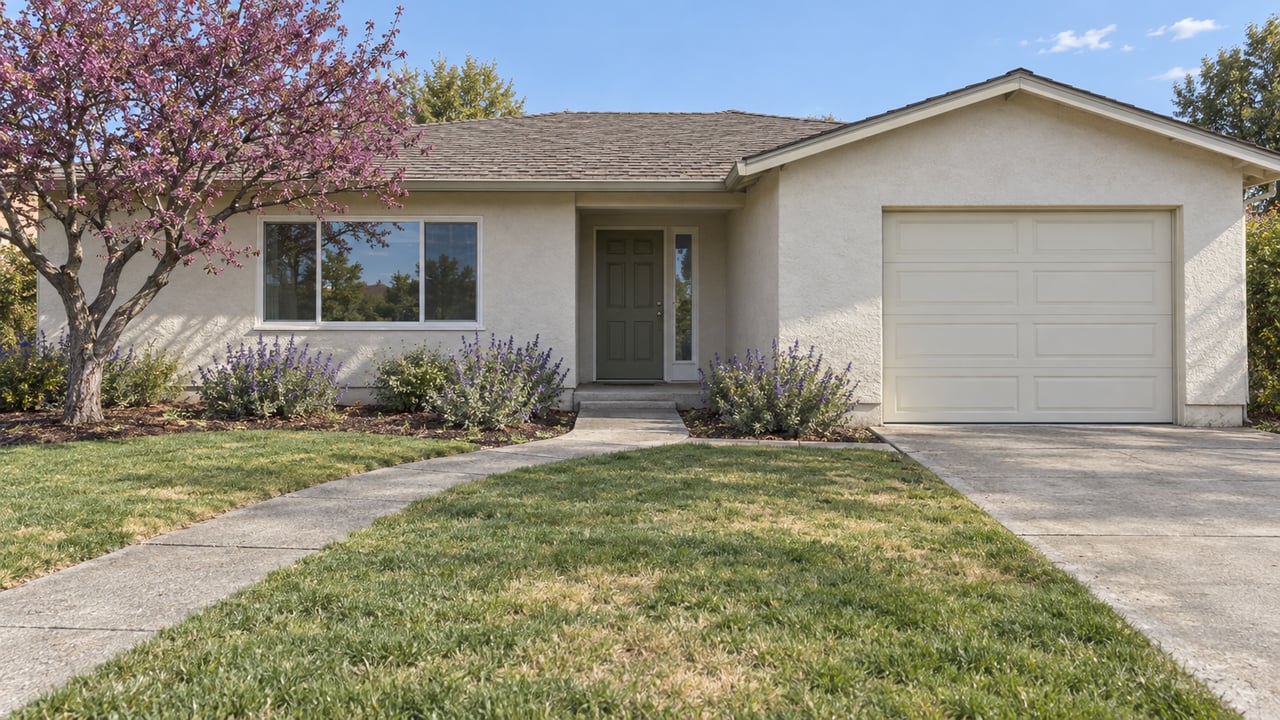
Santa Clara's Cheaper Power Is Real. Why Is the Gap Getting Smaller?
October 22, 2026
October 22, 2026
Two homes can sit a few blocks apart, one inside Santa Clara city limits and one in San Jose or Sunnyvale, and pay very different prices for the same kilowatt-hour. Santa Clara owns its electric utility, Silicon Valley Power. Most of its neighbors get electricity delivered by PG&E. The rate difference is large enough to show up on a household budget every month for as long as you own the house.
The discount has been shrinking. SVP raised rates two years in a row while PG&E cut its rates several times. The savings also grow with usage, so the gap matters most in a home with an EV in the garage, a heat pump in the attic or an induction range in the kitchen. If you're comparing Santa Clara with a PG&E-served city, the useful question is how much electricity your household will use, and that changes the answer more than the headline percentage does.
The City of Santa Clara published sample monthly bills when the City Council adopted SVP's 2026 rates. An average residential account using 410 kWh a month pays $73.85 under the 2026 rates, up $2.84 from $71.01. The council approved those rates in December 2025, and they took effect January 1, 2026. PG&E doesn't publish a matching table. Its current residential tariff, in effect since March 1, 2026, lists a forecast average bundled residential rate of 39.253 cents per kWh and notes that individual bills depend on usage, rate plan and fixed-charge tier.
Apply that average to the same usage levels and you get a rough comparison:
| Monthly usage | SVP bill, 2026 adopted rates | PG&E at its 39.253¢ average, rough calculation |
|---|---|---|
| 300 kWh | $53.52 | about $118 |
| 410 kWh | $73.85 | about $161 |
| 1,000 kWh | $182.93 | about $393 |
The SVP column comes from the city's own bill-impact table. The PG&E column is simple multiplication, so treat it as an estimate. Many San Jose and Sunnyvale homes buy generation from a community choice provider such as San José Clean Energy or Silicon Valley Clean Energy, which changes one line on the bill. PG&E also added a Base Services Charge in March 2026. It's $24 a month for most customers, $6 for CARE enrollees and $12 for FERA or deed-restricted affordable-housing customers. SVP's fixed piece is a $5.11 monthly meter charge, plus a 2.85% public-benefits charge on meter and energy charges and a state surcharge.
Look at the last row. At 410 kWh the difference is under $90 a month. At 1,000 kWh it's more than $200. The discount is a percentage, so the dollar savings grow with every kilowatt-hour you add.
SVP's rates page says its average residential rate is about 57% lower than PG&E's. The comparison sets SVP's D-1 average of 18.2 cents per kWh, effective January 1, 2026, against a PG&E rate of 42.2 cents. That PG&E number is dated September 1, 2025.
San José Spotlight's January 2026 fact brief made the same point with a dated example. It found that an SVP household using 411 kWh "would be billed about $75," compared with about $201 for a PG&E time-of-use customer at peak hours at the December 2025 rate of 48.974 cents. Both comparisons were accurate when they were written. PG&E's prices have moved since then.
Put SVP's 18.2 cents next to PG&E's current 39.253-cent average and SVP comes out about 54% lower, using two published averages that are both in effect as of October 2026. Santa Clara is still paying less than half of PG&E's average. The difference just isn't as wide as the number most people quote.
Here's how the gap narrowed over the past two years, in order:
As of this writing, PG&E's residential electric rate index still lists March 1, 2026 as the start of its current tariff. SVP's residential schedule is still the one that took effect January 1, 2026.
The two utilities are built differently, and that structure is why SVP's rates started so far below PG&E's. SVP describes itself as a not-for-profit municipal utility owned by Santa Clara residents and links that structure to its lower rates. It gets power from resources it owns plus multiyear contracts for solar, wind, hydroelectric, landfill gas and geothermal. Its 2025 residential power content label lists 39% solar, 39% wind, 19% eligible hydroelectric and 3% geothermal.
Because the gap is a percentage, the household that saves the most is the one that moves the most energy through the meter. An EV is the clearest example, and the two utilities set up time-of-use pricing very differently.
SVP's D-1 time-of-use option charges 13.690 cents off-peak and 17.960 cents peak for the first 300 kWh. Above 300 kWh, it's 16.023 cents off-peak and 20.295 cents peak. SVP's peak window is long: 6 a.m. to 10 p.m., Monday through Saturday, except listed holidays. On SVP, cheap hours are overnight, Sundays and holidays.
PG&E's peak windows are shorter, but its prices are higher across the board. E-TOU-C peak runs 4 to 9 p.m. every day, at 52.240 cents in summer and 39.757 cents in winter. Off-peak is 39.940 cents in summer and 36.757 cents in winter. E-TOU-D peak runs 5 to 8 p.m. on weekdays, with off-peak at 34.212 cents in summer and 34.886 cents in winter. A baseline credit of 8.140 cents per kWh applies to baseline usage.
Say overnight EV charging adds 300 kWh a month. Most of that usage lands above SVP's 300-kWh tier, so it costs roughly $48 before surcharges. The same 300 kWh at PG&E's winter E-TOU-D off-peak rate costs roughly $105. Both are back-of-the-envelope estimates based on published per-kWh prices, and your own driving will change the result. In either case, the dollar gap per added kilowatt-hour is larger than the gap on a typical base bill.
SVP's tiered pricing sets a limit, though. Above 300 kWh a month, every SVP rate goes up, so a high-usage Santa Clara household pays more per kWh than the city's 18.2-cent average. The savings at high usage are still large. They're just a bit smaller than the average rate would suggest.
SVP's residential rebate pages, last updated July 7, 2026, pay customers to add the electric loads that make the rate gap worth more.
Solar math in Santa Clara is different too. SVP's net metering schedule is open first come, first served until eligible generation reaches 5% of annual peak distribution demand. It settles once a year, and you can take payment for excess generation or carry it forward. In 2026, SVP pays 5.366 cents per kWh for excess energy. When the power you buy is already cheap, solar panels save less per kWh they offset than they would on a PG&E bill. The cheap rate is also why the EV and water heater rebates go further here.
That charge is part of PG&E's billing for its customers. SVP's residential schedule has its own fixed $5.11 monthly meter charge.
The city's utilities page lists electric service through Silicon Valley Power, plus water, recycled water, sewer, garbage and recycling. Ask the seller for recent utility bills during your contingency period to see what the home actually costs to run.
SVP's posted residential schedule is still the January 1, 2026 version, adopted after a 4% increase. Rate changes go to the Santa Clara City Council, so check SVP's rates page and recent council agendas before you finalize a budget.
This post is general information about published utility rates and rebates. It isn't financial advice, so confirm program terms with Silicon Valley Power and talk through your own numbers with the right professional.
If utility costs are part of your Santa Clara vs. San Jose or Sunnyvale decision, Taylor Lambert Group can help you factor monthly running costs into the homes you're comparing, and if you already own in Santa Clara, ask us for your free home valuation.
Stay up to date on the latest real estate trends.


Housing Market Updates!
Etiam non quam lacus suspendisse faucibus interdum. Orci ac auctor augue mauris augue neque. Bibendum at varius vel pharetra. Viverra orci sagittis eu volutpat.